Project description
Saint Joseph Hospital retained Cator, Ruma & Associates to provide comprehensive MEP engineering design services for a $623 million campus redevelopment, the largest project planned in Denver at the time. The replacement hospital integrated the former Children’s Hospital site into the Saint Joseph campus, transforming the Uptown Healthcare District into a cohesive urban medical campus that blends hospital, medical office, general office, retail, and open space.
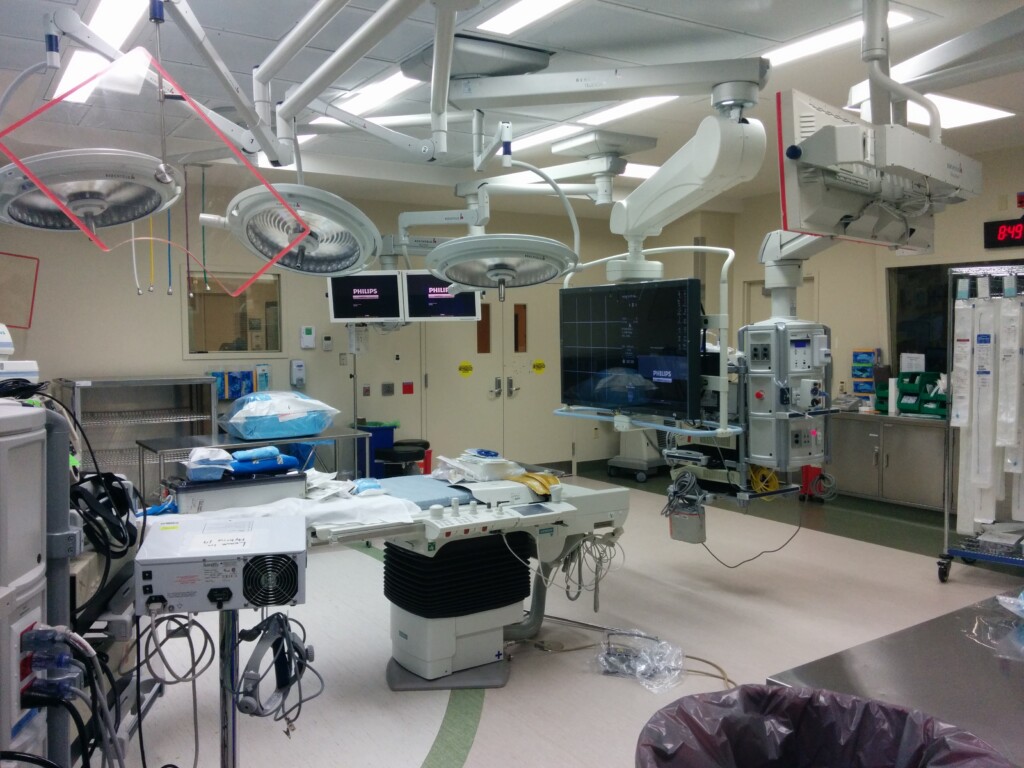
The new hospital encompasses approximately 860,000 square feet and includes 348 patient beds, a rooftop helipad, a central courtyard, a rooftop garden, and a prominent chapel structure. The eight-story plus basement facility is supported by a freestanding central utility plant, one attached parking garage, a second remote parking structure, and integration with the adjacent Russell Pavilion building. CRA’s MEP design extended across all facility components, including a campus-wide fire alarm system designed to support a complex smoke evacuation system serving the operating rooms and a comprehensive smoke control strategy for shafts and stairwells.
Constructed on an active hospital campus, the project required extensive phasing and coordination. Demolition of existing parking garages and medical office buildings, tenant improvement build-outs, temporary parking accommodations, and early site utility installation were sequenced to allow excavation and construction of the new hospital without interrupting ongoing healthcare operations. All major site utilities were installed prior to foundation excavation, demanding precise early coordination and infrastructure planning.
To meet an aggressive schedule, the project adopted an Integrated Project Approach that enabled parallel 3D coordination between the design team and MEP trades. Shop drawing development and detailed coordination occurred simultaneously with final design documentation, requiring daily collaboration among engineers and subcontractors. This high level of integration reduced field conflicts and accelerated installation.
Prefabrication was a defining feature of the construction strategy. Multi-trade corridor racks were assembled off-site in 20-foot sections, incorporating structural framing, ductwork, piping, plumbing, fire protection, terminal units, pneumatic tube systems, electrical conduit, cable tray, and portions of corridor wall framing. Patient bathrooms and select staff and visitor toilet rooms were fabricated as complete modular pods, including fixtures, piping, and finishes. Patient room headwalls were also prefabricated, improving quality control, installation efficiency, and schedule reliability.
Guiding Principles for the Design
- Urban Campus Integration
- Operational Continuity During Construction
- Life Safety and Smoke Control Excellence
- Integrated Project Delivery
- Prefabrication for Quality and Speed
- Centralized Utility Strategy