Project description
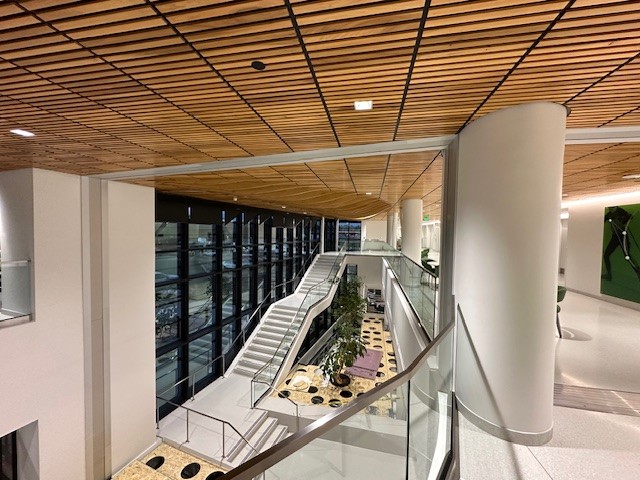
Completed in 2023, the St. Luke’s Center for Orthopedic & Sports Medicine (COSM) is a 250,000-square-foot outpatient facility on the St. Luke’s Boise campus that consolidates orthopedic, sports medicine, and musculoskeletal services into a single, high-performance environment. The facility integrates two primary components: a state-of-the-art Ambulatory Surgery Center (ASC) with multiple Class C operating rooms, sterile processing, and perioperative support spaces, and an adjacent B-Occupancy medical office building housing orthopedic clinics, imaging suites including MRI and X-ray, procedure rooms, provider offices, and a comprehensive outpatient rehabilitation center.
The rehabilitation program includes a large physical therapy and sports medicine gym, indoor and outdoor exercise areas, and an artificial turf training surface designed for gait training and athletic performance therapy. The building supports a broad range of patient acuity levels, from surgical intervention to post-operative recovery and high-volume outpatient therapy, requiring highly adaptable mechanical systems capable of meeting both stringent surgical standards and dynamic rehabilitation occupancy demands.
Cator, Ruma & Associates served as the mechanical engineer for this technically complex healthcare project, designing systems that balance precision environmental control, energy performance, patient safety, and long-term operational flexibility. A structured parking garage constructed as part of the project also serves as a strategic mechanical infrastructure hub. Cooling towers were located adjacent to the garage rather than on the main building roof to minimize overall building height, preserve rooftop program space, and reduce contamination risk. Condenser water piping was routed underground from the garage to the main mechanical room, eliminating tower-related penetrations in patient care zones and isolating potential Legionella risk away from outside air intakes. This approach reduced building square footage requirements while enhancing safety, maintainability, and system resilience.
Guiding Principles for the Design
- Patient Safety Through Infrastructure Isolation
- Surgical Environmental Precision
- Specialized Imaging Performance
- Adaptability for Evolving Clinical Needs
- Zoning for Diverse Occupancy Profiles
- Efficient Use of Site and Building Volume