Project description
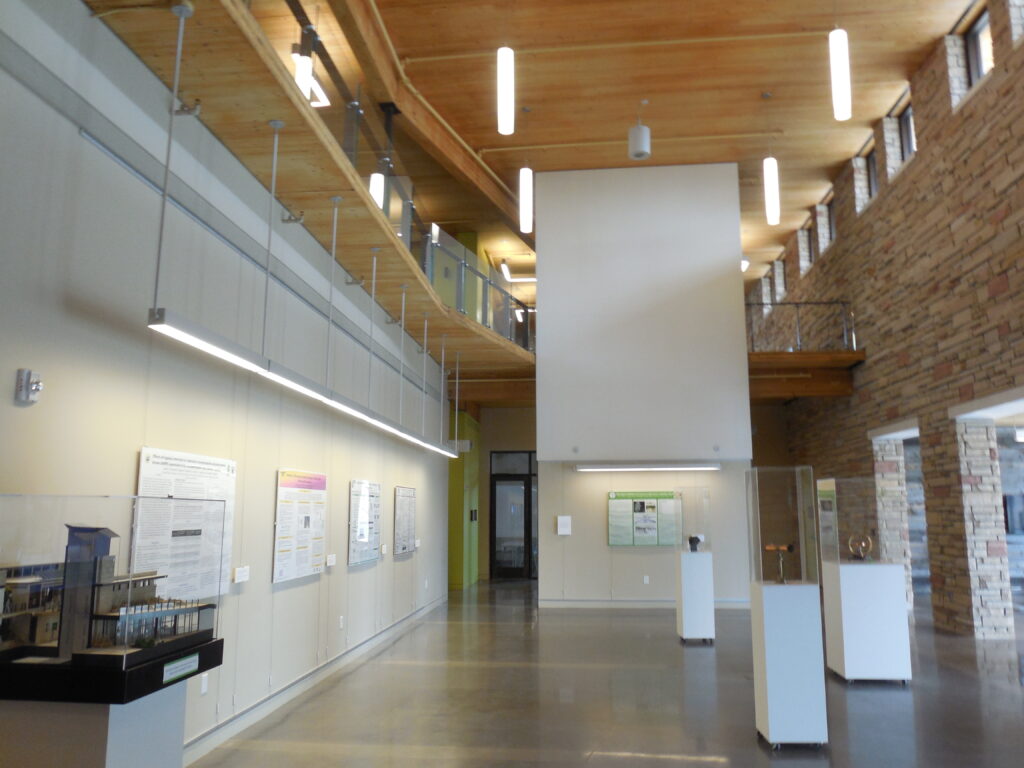
The North Residence Hall is a five-story, 96,000-square-foot facility, and the South Residence Hall is a five-story, 75,000-square-foot facility. Both buildings provide student rooms with a mix of private and community bathroom layouts. The 11,000-square-foot, two-story Pavilion offers programming, lounge and meeting spaces, and a venue for the annual Art & Science Exhibition for Laurel Village residents.
The design intent for Laurel Village was to integrate academic engagement into residential life and to encourage community interaction, collaboration, and student support. The project includes 20,000 square feet of academic program space featuring an academic commons with two science classrooms, faculty offices including space for the director of the College of Natural Sciences Community, and outdoor learning areas such as an outdoor classroom and amphitheater.
The mechanical, electrical, and plumbing systems were designed to deliver very low energy use while maintaining cost efficiency. Both residence halls achieved LEED Gold certification and incorporate sustainable features such as variable refrigerant flow HVAC systems, energy recovery ventilation, and high-efficiency condensing water heaters.
Lighting design combined low-energy light sources with residential-style luminaires to create a comfortable environment that still meets contemporary sustainability requirements. Multiple lighting and plug-load control strategies were evaluated for the student rooms, including vacancy and daylight sensors. Ultimately, the university elected to use manual controls with infrastructure in place to allow future automation.
The Pavilion achieved LEED New Construction Platinum certification and incorporates advanced sustainable systems including a katabatic cooling tower, passive heating and cooling elements within the tower structure, a trombe wall, a variable refrigerant flow HVAC system, and an energy recovery ventilator. It is the 18th building at CSU to achieve LEED certification and the fourth within Housing & Dining Services.
Guiding Principles for the Design
- Student-Centered Living
- Ultra-Low Energy Use
- Sustainable Systems
- Academic–Residential Integration
- High-Efficiency Systems
- Community-Focused Spaces
- Safety and Security
- LEED Gold/Platinum Performance