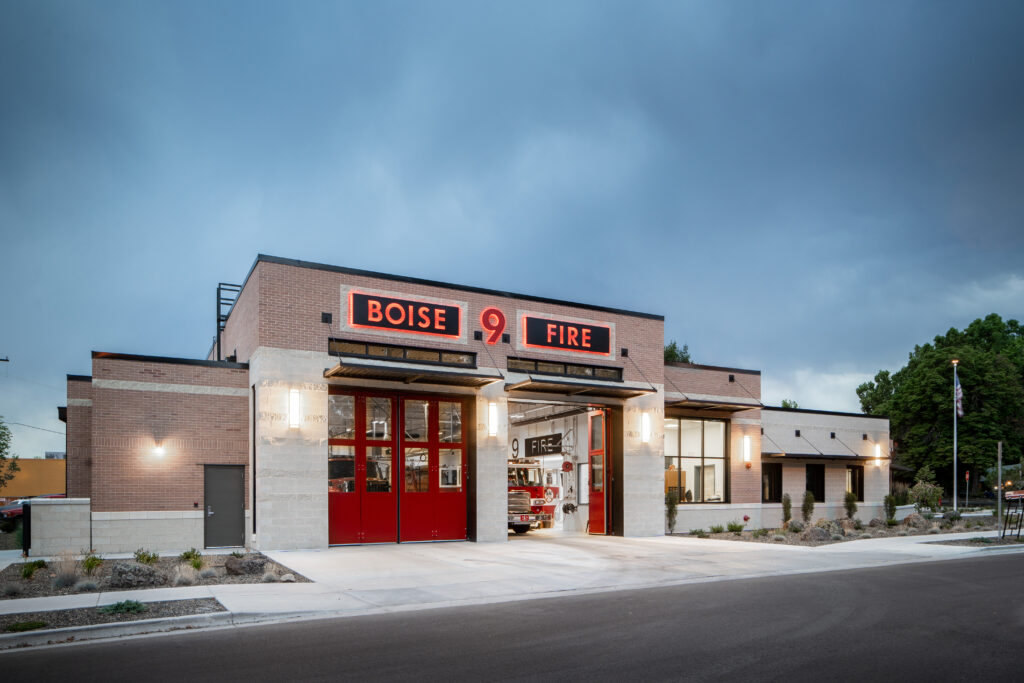
Project description
The station replaces the building originally erected in 1975 and includes features that deliver energy savings (estimated at 65% more energy-efficient than minimum standards). Energy features include a highly efficient HVAC system, a waste-heat recovery system, low-water-use landscaping, and solar tubes to provide more natural light.
HVAC includes variable refrigerant flow (VRF) mini-splits in the administration and living areas, evaporative cooling with radiant heaters in the Rig Room, and Carmon exhaust for rigs operated by others. The hot water system has 95% thermal efficiency, meaning it is designed to minimize the time for hot water to reach the fixtures, reducing waste.
Plumbing includes the standard Universal Plumbing Code (UPC) for sanitary waste and vent, domestic hot/cold water systems, roof drainage for flat roof areas, compressed air, and natural gas piping. To maintain efficiency, low-flow fixtures were designed for plumbing.
HVAC, plumbing, and fire sprinkler design for Station 8 was completed in accordance with the International Green Construction Code.
Electrical work expanded beyond standard lighting and power design to focus on high energy efficiency. Solar systems were designed to produce an estimated 33,600 kWh/year, equivalent to the energy usage of three average homes.
Technology services were provided throughout the building. All device locations were coordinated with the owner.
Guiding Principles for the Design
- Sustainable Systems
- Operational Performance
- Maximize Energy Efficiency
- Reliable Design