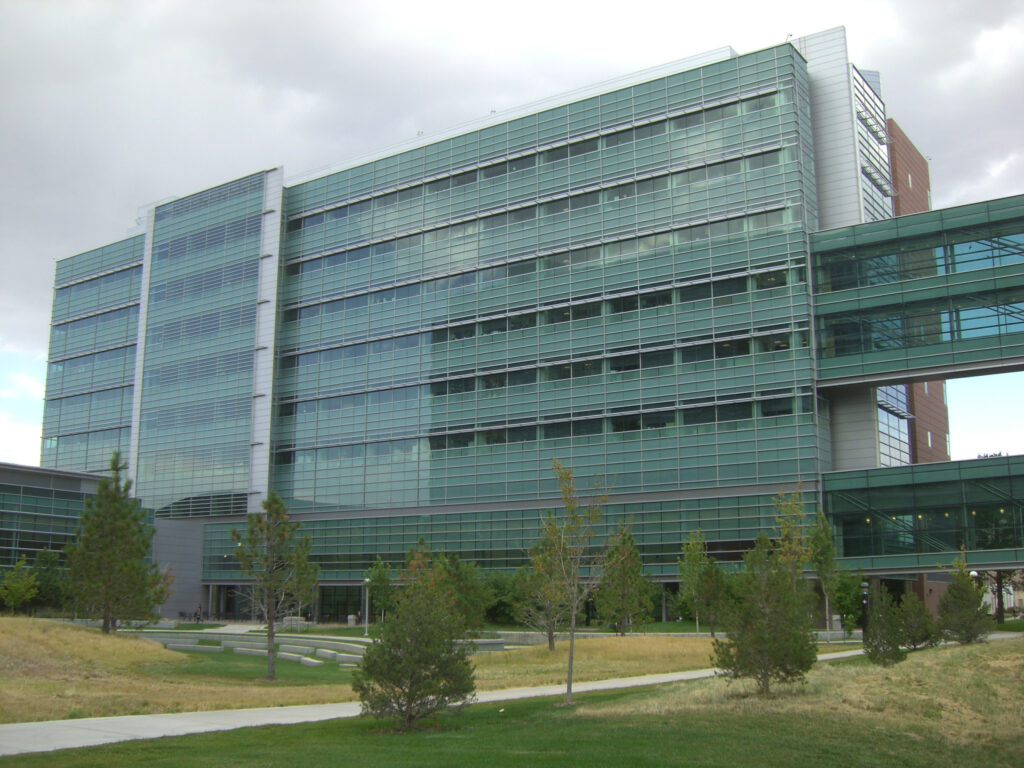
Project description
Research Building 1 on the CU Anschutz Medical Campus is a large, flexible laboratory facility that includes extensive lab support space and offices. Despite its size and research importance, the building was significantly underperforming in energy efficiency. Excessive air change rates, poor energy recovery, unnecessary sound attenuation devices, and outdated lighting controls contributed to high operating costs and inefficient system performance. CU Anschutz launched a significant improvement effort to reduce energy use, improve occupant comfort, and increase system reliability.
Cator, Ruma, and Associates acted as the prime consultant and provided the mechanical and electrical engineering design for the project. CRA evaluated existing systems, assessed operational shortcomings, and created a phased improvement plan that balanced performance, safety, and budget goals.
Phase I
Phase I focused on reducing air change rates in the laboratories to align with industry standards. Minimum air change rates were lowered to six during occupied periods and four during unoccupied periods, significantly reducing fan and reheat energy use. CU’s Environmental Health and Safety Department tested the reduced airflows before construction and confirmed they still met safe operating conditions.
Lighting controls were installed throughout the building, and the occupancy sensors in the new system were tied to the unoccupied air-change setpoints. Only cooling fan coils were installed in linear equipment rooms, reducing load on the central air-handling units. The resulting airflow savings were roughly 85,000 cfm in the South Tower alone.
Phase II
Phase II introduced a runaround heat-recovery system and added evaporative cooling to the existing air-handling units serving the South Tower and the vivarium in the North Tower. The phase also included new condensate return systems for both towers. These upgrades required a long-term outage of one air handler and one exhaust fan, which was only possible because Phase I had already reduced overall airflow demand. Additional improvements were made, including removing unnecessary sound attenuators to increase system pressure and reliability.
Phase III
Phase III applied similar improvements in the North Tower. CRA completed roughly half of the planned upgrades due to available funding, continuing the improvements started in earlier stages.
The combined impact of these efforts resulted in annual savings of roughly $900,000, significant reductions in steam use, and approximately 1.4 million kWh in electricity savings. The project delivered improved system performance, greater comfort for building occupants, and a more reliable, maintainable facility.
Guiding Principles for the Design
- Reduce Energy Waste at the Source
- Improve System Reliability
- Protect Researcher Safety
- Maximize Value Through Phased Implementation