Project description
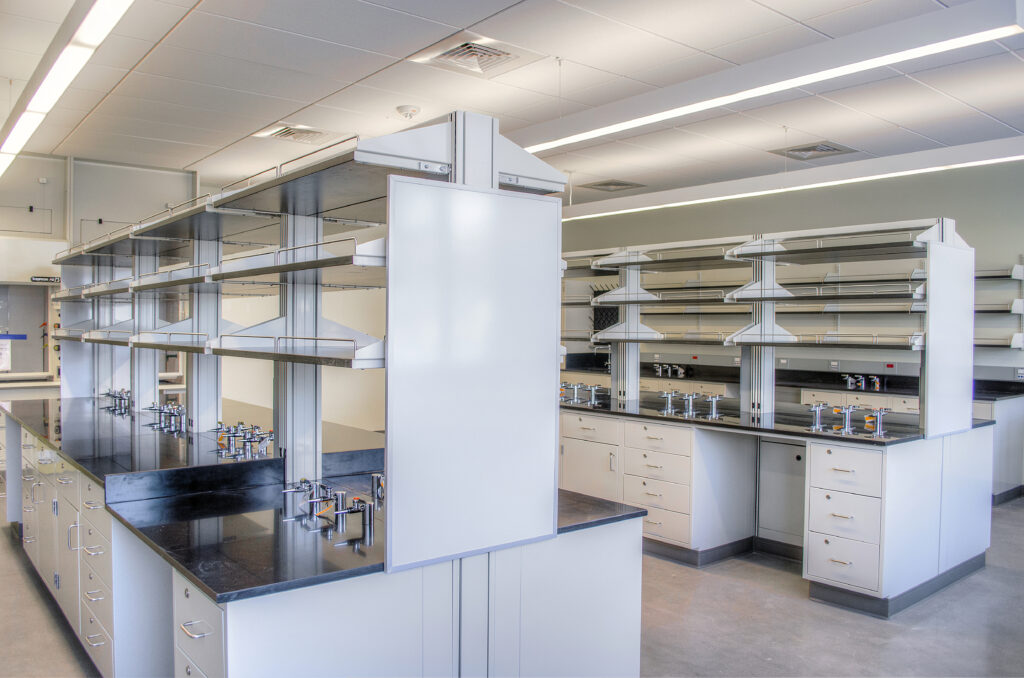
The Suzanne and Walter Scott Jr. Bioengineering Building at Colorado State University is a 120,000-square-foot, three-story facility with a partial basement and penthouse level. A large three-story atrium separates the office and classroom spaces from an extensive suite of wet and dry laboratories, including biomedical, environmental, water quality, optics/laser, and microscopy labs. The building also houses a penthouse data center designed to accommodate up to 80 racks.
The facility achieved LEED Gold certification and incorporates a range of sustainable strategies, including hot-air energy recovery from the data center, variable-flow laboratory exhaust systems, exhaust air energy recovery, low-flow plumbing fixtures, increased ventilation, evaporative cooling, natural ventilation in the atrium, CO₂ monitoring in high-occupancy spaces, daylight harvesting, and occupancy-based lighting controls.
The data center initially includes 30 low-density racks, each supporting up to 12 kW per rack, with capacity for 50 additional high-density racks. Rack power is supplied by an uninterruptible power supply (UPS) system. Its mechanical system is designed as a hybrid solution to support both current and future needs. For current operation, a 38,000 CFM air-handling system supplies overhead cooling to cold aisles and provides 100% outside-air economizer capability, evaporative cooling, and warm-air recovery routed to the laboratory air-handling units. Future adaptability is built in through provisions for in-row or in-rack cooling.
Emergency and standby power are provided by a 1,250 kW diesel generator, with paralleling equipment to allow connection of a future generator. A dedicated process cooling system generates chilled water by reclaiming energy from the return water serving the building’s air-handling units, producing 58–60°F process water for the laboratories. This approach uses the campus chilled-water system twice, increasing Delta-T and improving the overall efficiency of the central plant.
Guiding Principles for the Design
- Emergency Power Resilience
- Campus Harmony
- Sustainable Systems
- Hybrid Data Center Design
- Flexible Infrastructure
- Economizer Cooling Strategy
- Transparent, Open Labs
- LEED Gold Performance